Source Toyota Triton Aluminum Cylinder Head for Cars, Trucks, and Engines
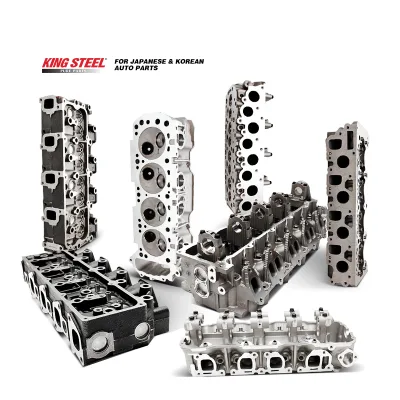
Compare 30 listings for the Toyota Triton aluminum cylinder head, featuring options in aluminum alloy and bare cylinder head materials. Buyers can review specifications including piston cylinder structures, water-cooled designs, and various OEM numbers for car and truck applications.
Key considerations
Products List




Comprehensive Sourcing Guide
Strategic Sourcing Guide for Toyota Triton Aluminum Cylinder Heads
Understanding Product Specifications and Variants
When sourcing aluminum cylinder heads for the Toyota Triton, buyers must first navigate a complex landscape of model-specific engineering and material composition. The core product is defined by its construction material, which is consistently identified as aluminum alloy. This material choice is critical for thermal management and weight reduction in diesel engine applications. The observed product data indicates a variety of specific configurations, including piston cylinder structures and gas-liquid pressurized cylinder types. While the primary focus is on the cylinder head, the surrounding component ecosystem includes cylinder liners made from composite plates and cylinder caps described as bare cylinder heads, suggesting a modular assembly approach where specific parts may be sourced separately or as a complete unit.
The technical diversity is further highlighted by the presence of multiple engine model identifiers in the supply chain. Listings reference specific codes such as 1GR-FE-L, 1GR-FE-R, 22R, 3L, 5L, and 2J. These codes correspond to different engine families, and the Triton platform has historically utilized various iterations of these powertrains. For instance, the 22R and 22REC models are explicitly noted in the product specifications, indicating a direct compatibility path for older or specific regional variants of the vehicle. Additionally, the data points to a "V Style" arrangement pattern, which is a standard configuration for many of these engines, though "H Style" arrangements are also observed in the broader dataset, requiring buyers to verify the exact engine architecture before purchase.
The power source for these units is predominantly pneumatic in the context of the actuation systems associated with the cylinder heads, and the cooling method is specified as water-cooled. This is a fundamental requirement for maintaining operational integrity under load. The OEM numbers serve as the primary verification tool for compatibility. Key identifiers include M11101-54131, Ok75A-10-100, and a cluster of numbers such as 11101-35050, 11101-35060, and 11101-35080. Another significant reference is OE. NO 11101-68012, paired with 11101-49145/49146/48013. Buyers must cross-reference these exact numbers against their vehicle's engine block to ensure a precise fit, as the aluminum cylinder head is not a universal component but a highly engineered part specific to the engine's combustion chamber geometry.
Compliance, Certification, and Quality Standards
In the B2B procurement of automotive components, verifying compliance with international standards is as critical as the physical dimensions of the part. The supplied product data indicates that certain listings carry certifications such as ISO, with specific references to "ISO TSMaterial:Aluminum Alloy" and "ISO Material:Aluminum Alloy." While the text mentions "ISO" in conjunction with the material, it is essential for buyers to distinguish between general ISO standards and specific automotive industry certifications. The data explicitly lists "ISO9001" and "TS16949" as product standards. TS16949 (now largely superseded by IATF 16949) is a crucial quality management standard for the automotive supply chain, indicating that the manufacturing process adheres to strict automotive quality control protocols.
Furthermore, the presence of "SGS" as a product standard suggests that third-party inspection or testing may be involved in the quality assurance process. SGS is a recognized inspection, verification, testing, and certification company, and its mention implies that the product may have undergone independent verification for material composition or dimensional accuracy. However, buyers should not assume that every listed product possesses these certifications automatically. The data presents these as attributes of specific listings rather than universal guarantees for all 30 observed products. Therefore, the procurement strategy must include a direct request for valid, current certification documents from the supplier.
The warranty terms provided in the data are standardized at 12 months. This is a baseline expectation for aftermarket automotive parts, but it does not replace the need for rigorous pre-shipment quality checks. The "Market Type" is identified as "After Market," which implies that these parts are replacements rather than original equipment manufactured by the vehicle maker. This distinction is vital for managing expectations regarding fitment tolerances and material purity. Buyers should verify if the "Standard" designation in the product data refers to a specific industry norm or a generic classification. The absence of specific certification numbers like "ISO 14001" or "ISO 45001" in the high-confidence facts means buyers should not claim these environmental or safety standards are present unless explicitly confirmed by the supplier for the specific batch being purchased.
Cost Drivers and Pricing Dynamics
The pricing landscape for aluminum cylinder heads is influenced by a combination of material costs, manufacturing complexity, and supply chain logistics. The observed price range in the market is broad, spanning from 1 to 1000 USD. This wide variance suggests that the market includes everything from basic replacement components to fully machined, high-performance units with additional features or premium packaging. The Minimum Order Quantity (MOQ) ranges from 1 to 20 units, indicating flexibility for both small-scale repair shops and larger fleet maintenance operations.
Material costs are a primary driver, given that the cylinder body and head are constructed from aluminum alloy. Fluctuations in global aluminum prices will directly impact the final cost of the component. Additionally, the complexity of the casting and machining processes required to achieve the precise tolerances for the 22R, 22REC, and 1GR-FE engine families adds to the cost. The "Casted Iron" packing attribute observed in some listings is unusual for an aluminum head and may refer to the packaging material or a specific variant of the product, potentially influencing the weight and shipping costs.
Packaging also plays a role in cost. The data lists "Wooden Case" and "Box, 1 PCS/CTN" as packing methods. Wooden cases are typically more expensive and are used for high-value or fragile shipments, whereas standard cartons are more cost-effective for bulk orders. Buyers should consider the total landed cost, which includes the unit price, packaging fees, and shipping expenses. The "After Market" classification often allows for more competitive pricing compared to OEM parts, but the trade-off is the need for rigorous quality verification to ensure the part meets the performance standards of the original equipment.
Typical Applications and Engine Compatibility
The application of these aluminum cylinder heads is primarily centered on the Toyota Triton and related diesel engine platforms. The data explicitly lists "Car" and "Car,Truck" as application categories, confirming the versatility of these components across different vehicle types. The specific engine models identified, such as 22R, 22REC, 3L, 5L, and 2J, are historically associated with Toyota's robust diesel engine lineup used in trucks and utility vehicles. The "Diesel" attribute confirms the fuel type, which dictates the compression ratios and thermal loads the cylinder head must withstand.
The "V Style" arrangement pattern is a common configuration for these engines, but the presence of "H Style" in the data suggests that buyers must be vigilant about the specific engine architecture. A mismatch in arrangement pattern can lead to catastrophic engine failure. The "Single-acting Cylinder" and "Double-Acting Cylinder" attributes in the data may refer to associated hydraulic or pneumatic systems rather than the cylinder head itself, but they highlight the complexity of the engine's auxiliary systems. Buyers should ensure that the cylinder head they source is compatible with the specific cooling and lubrication systems of their engine.
The "FC No." (Factory Code or similar identifier) such as Fct1058 and Fct1032, along with the "Amc" codes like 909053 and 909061, serve as additional reference points for compatibility. These codes often link to specific production batches or design revisions. For example, the 1GR-FE-L and 1GR-FE-R variants suggest left and right cylinder head configurations, which is a critical detail for V-engine applications. Misidentifying the left or right side can result in incorrect port alignment and improper engine function.
Supplier Evaluation and Sourcing Strategy
Evaluating suppliers for aluminum cylinder heads requires a multi-faceted approach that goes beyond price comparison. Given the "After Market" nature of the products, buyers should prioritize suppliers who can demonstrate a clear lineage of quality control. The presence of "ISO9001" and "TS16949" standards in the data is a positive indicator, but buyers must verify the validity of these certificates for the specific facility producing the goods. A supplier claiming these standards should provide a copy of the current certificate, not just a generic statement.
The origin of the products is listed as "China," which is a major manufacturing hub for automotive components. While this offers cost advantages, it also necessitates a robust verification process. Buyers should assess the supplier's production capacity, lead times, and ability to handle the observed MOQ ranges of 1 to 20 units. The "Customization" attribute being "Available" is a significant advantage, allowing buyers to request specific modifications or tolerances if the standard parts do not perfectly match their requirements. However, customization often extends lead times and increases costs, so this should be weighed against the urgency of the procurement need.
When evaluating suppliers, buyers should also look for transparency in their product descriptions. The data shows a mix of specific OEM numbers and generic descriptions. A reputable supplier will provide detailed documentation linking their product to the specific OEM numbers (e.g., 11101-54131) and confirm the material composition (Aluminum Alloy). The "Warranty" of 12 months is a standard offering, but the terms of the warranty—such as what constitutes a defect and the process for claims—should be clearly understood before placing an order.
Quality Control and Long-Term Procurement Considerations
Quality control is paramount when sourcing aluminum cylinder heads, as failures in this component can lead to severe engine damage. The "Water-Cooled" requirement means that the casting must be free of porosity and cracks that could lead to coolant leaks. Buyers should insist on visual inspection reports and, if possible, non-destructive testing (NDT) results for critical batches. The "Cylinder Liner Material" being a "Composite Plate" suggests a specific design that may require careful handling during installation to avoid damage to the liner.
Long-term procurement considerations involve building a relationship with suppliers who can provide consistent quality over time. The "Market Type" being "After Market" means that the supply chain is dynamic, and part availability can fluctuate. Buyers should maintain a buffer stock of critical parts, especially for older engine models like the 22R and 22REC, which may have fewer active suppliers. The "12 Months" warranty provides a safety net, but it is not a substitute for proactive quality management.
Buyers should also consider the "Packing" methods when planning logistics. The "Wooden Case" option offers superior protection but adds weight and cost, while the "Box, 1 PCS/CTN" is more efficient for high-volume shipments. The choice of packaging can impact the condition of the product upon arrival and should be factored into the total cost of ownership. Finally, the "Standard" designation in the product data should be treated as an observation rather than a guarantee. Buyers must verify that the specific product they receive meets the necessary industry standards for their application, ensuring that the aluminum cylinder head performs reliably in the demanding environment of a Toyota Triton diesel engine.
Comparative Analysis of Product Attributes
To facilitate decision-making, the following table summarizes the key attributes observed in the supply chain for Toyota Triton aluminum cylinder heads. This comparison helps buyers identify the specific characteristics that align with their operational needs.
| Attribute Category | Observed Values | Procurement Implication |
|---|---|---|
| Material | Aluminum Alloy, Composite Plate (Liner) | Lightweight, high thermal conductivity; verify liner compatibility. |
| Engine Models | 22R, 22REC, 3L, 5L, 2J, 1GR-FE-L/R | Strict model matching required; verify OEM numbers. |
| Certifications | ISO, ISO9001, TS16949, SGS | Verify current validity; prioritize TS16949 for automotive quality. |
| Packing | Wooden Case, Box (1 PCS/CTN), Casted Iron | Impact on shipping cost and product protection. |
| Warranty | 12 Months | Standard industry term; clarify claim process. |
| Origin | China | Major manufacturing hub; verify supplier location and capacity. |
| Application | Car, Truck, Diesel | Confirm vehicle type and engine configuration (V or H style). |
| Customization | Available | Allows for specific tolerances; may affect lead time. |
This table serves as a quick reference for buyers to ensure they are evaluating the correct parameters. The diversity in engine models and arrangement patterns underscores the necessity of precise identification before procurement. By adhering to these guidelines and verifying the specific attributes against the supplied data, buyers can mitigate risks and secure high-quality aluminum cylinder heads for their Toyota Triton applications.
FAQs
What materials are used for the cylinder head and body?
The cylinder head and body are constructed from aluminum alloy. Some listings also specify composite plate material for cylinder liners and bare cylinder head caps, ensuring thermal management and weight reduction for diesel engines.
Which engine models are compatible with these aluminum heads?
Compatible models include 22R, 22REC, 3L, 5L, 2J, and 1GR-FE variants. Buyers must verify specific OEM numbers like 11101-54131 or 11101-68012 to ensure precise fitment for their specific vehicle application.
Can buyers request customization for these cylinder heads?
Yes, customization is available for these products. Buyers can request specific modifications or tolerances if standard parts do not match their requirements, though this may extend lead times and increase costs.
What certifications do the manufacturers hold?
Certifications include ISO9001, TS16949, and SGS standards. Some listings mention ISO in conjunction with aluminum alloy material, but buyers should verify valid certificates for the specific facility producing the goods.
How is the product packaged for shipment?
Packaging options include wooden cases, boxes with one piece per carton, or casted iron packaging. The choice of packaging affects shipping costs and protection levels for the fragile aluminum components during transit.
What is the warranty period for these parts?
The standard warranty period is 12 months for these aftermarket parts. This baseline expectation covers defects but does not replace the need for rigorous pre-shipment quality checks before final installation.
Where are these cylinder heads manufactured?
The products originate from China. This location offers cost advantages but requires a robust verification process to ensure quality standards and compliance with the specified ISO and TS certifications.